Silver Dipper
“This is about the most perfect opportunity to get the douchebag fired. I’m sick and tired of him derailing the organization and compromising the reputation of our role models.”
“Role models? Whom are you talking about?”
“Well, for one, myself!” — Mr. Kravitz, the senior vice-president at the firm, snapped. “I’ve heard some really nasty gossip about me that originates from that prick, which I don’t want to discuss right now. Look, just the other day, human resources told me about a rather disturbing episode in the atrium at the coffee shop. He told the barista in front of two dozen people that he finds the vast majority of homosexual people incredibly annoying. Shortly thereafter, he remarked how he found the exact same proportion of heterosexuals to be just as unbearable. Apparently, the lesbian barista laughed at such sheer audacity... no, not audacity! Stupidity! That’s what it is! Unmitigated, insubordinate stupidity.”
Mr. Itchego, the managing director of the Lab, was nodding his head, acknowledging the complexity of the situation. Overly satisfied by the reaction, Mr. Kravitz continued: “You see, he brings discord and is always on the edge. Then again, it’s so hard to find grounds for firing him. One thing is for sure: someday... mark my words... he is going to get us into a world of trouble.”
“So you are saying: Use the one spot offered to the Lab to accompany the CEO to this ridiculous ski retreat at Snowbird, and knowing Kowalski, he will say at least one or two things that will freak out Mr. Glossman? You are certain it will be the end of him in the Lab.”
“Exactly! Mr. Glossman wouldn’t be at the top of the firm if he were to take such nonsense. Kowalski is as good as fired, my friend.”
Mr. Kowalski was sitting in the lounge dedicated to private aviation with the other four passengers bound for the same flight to Salt Lake City: Mr. Glossman, his CFO, Mr. Bataglia, the co-founder of the firm, Mr. Kroenecker, and Mr. Glossman’s secretary, Ms. Thorensen, who recently joined after spending years in the real-estate business. The conversation was focused on a topic Mr. Kowalski grasped dimly: obtaining a corporate bond for the firm at the retreat. Evidently, the bond would somehow legitimize the perception of the oft-criticized Mr. Bataglia on Wall Street. The firm did not need the money; it was an attempt at courting the bankers for future acquisition plans. Along with Mr. Glossman, Mr. Bataglia was going to great lengths to perfect the presentation he was scheduled to give to the main banker, Mr. Barker, who was hosting the event. The remaining executive, Mr. Kroenecker, on the other hand, was thoroughly amused by Ms. Thorensen’s flirtatious décolleté, to the point where Mr. Kowalski thought the two of them were written off at the start of the trip.
He did not expect much from the retreat, except for some good skiing. It was not the first time he had seen executives engage in dumb conversations with scientists at the firm, careful not to let their own insecurities and ignorance bubble up to the surface. Even though the outcome of the firm was highly technical, nearly all executives were arrogant “visionary” types, high on attitude, low on acumen, who had no idea what they were talking about. Many of them had the aura of credibility and past “achievement” such that, if questioned, no one could actually point to exactly what it was.
The colossal magnitude of obedience and sucking up to the next level executive dictated all promotions and decision making. Needless to say, Mr. Glossman, as the recipient of most sycophancy and ass-licking, had lost contact with reality a long time ago. Nearly everyone he ever communicated with was on his payroll, using the wildest imaginable flattery to get ahead. He even thought he was funny, as people would laugh at nearly all “wit” he would utter. Consequently, he was in the process of assembling his thoughts into a book much like Marcus Aurelius’ Meditations.
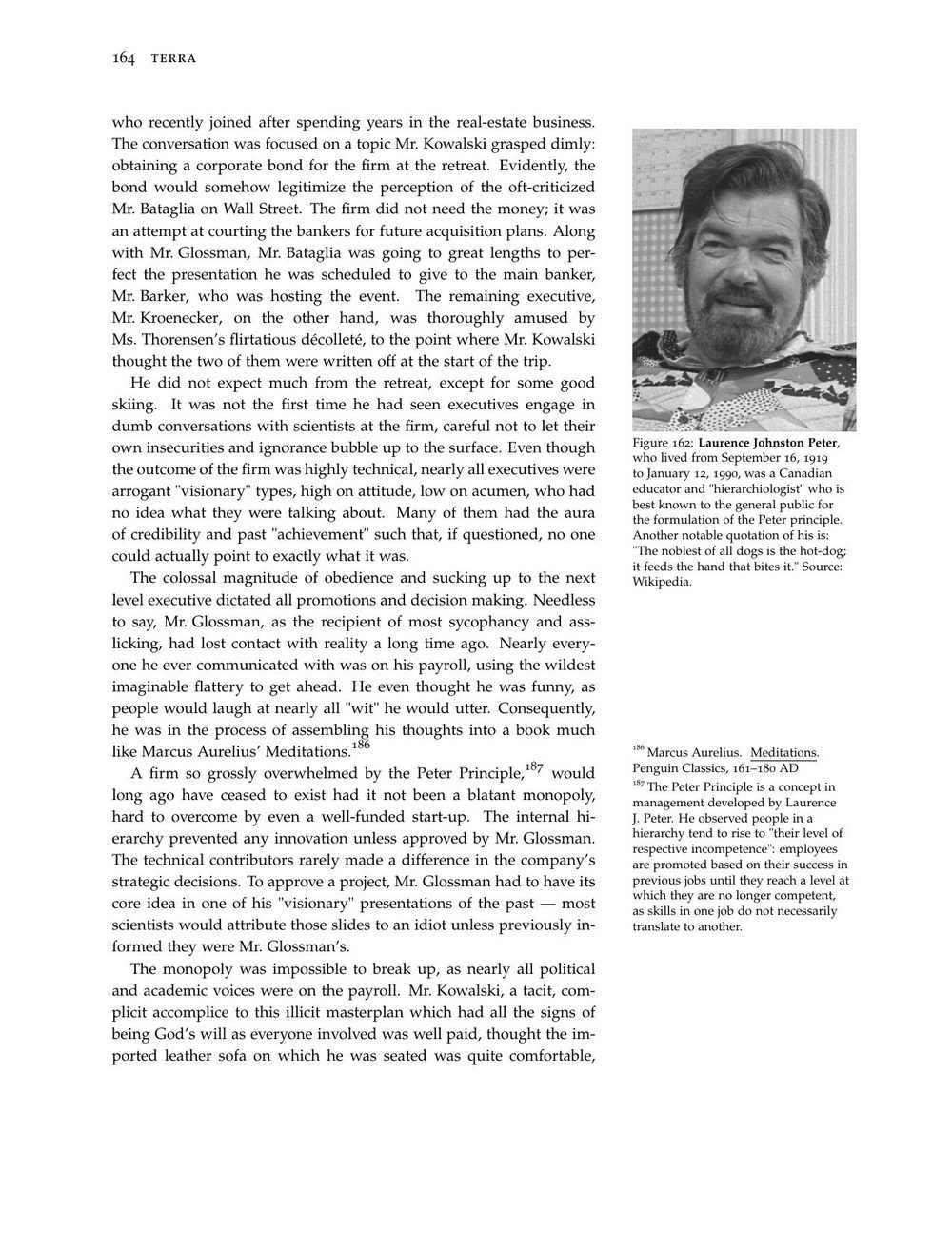
A firm so grossly overwhelmed by the Peter Principle,1The Peter Principle is a concept in management developed by Laurence J. Peter. He observed people in a hierarchy tend to rise to “their level of respective incompetence”: employees are promoted based on their success in previous jobs until they reach a level at which they are no longer competent, as skills in one job do not necessarily translate to another. would long ago have ceased to exist had it not been a blatant monopoly, hard to overcome by even a well-funded start-up. The internal hierarchy prevented any innovation unless approved by Mr. Glossman. The technical contributors rarely made a difference in the company’s strategic decisions. To approve a project, Mr. Glossman had to have its core idea in one of his “visionary” presentations of the past — most scientists would attribute those slides to an idiot unless previously informed they were Mr. Glossman’s.
The monopoly was impossible to break up, as nearly all political and academic voices were on the payroll. Mr. Kowalski, a tacit, complicit accomplice to this illicit masterplan which had all the signs of being God’s will as everyone involved was well paid, thought the imported leather sofa on which he was seated was quite comfortable, the served champagne and strawberries, as well as a decent plate of charcuterie, were quite tasty, and focused on indulging in his circumstantial, epicurean destiny.
The pilot recognized Mr. Kowalski and Ms. Thorensen as the new passengers on the corporate private jet. He welcomed them on board:
“Have you ever been on a Citation?”2Citation is a family of business jets by Cessna. In the fifty years following its first flight in 1969, deliveries reached 8,000 by 2022, while logging over 41 million flight hours. Source: Wikipedia.
“I have received several citations in the past, though never been on one.” — replied Mr. Kowalski while witnessing the pilot’s eyeballs carefully inspect the contents of Ms. Thorensen’s dress.
There was little doubt Ms. Thorensen and Mr. Kroenecker would sit together on a pair of seats isolated in the back of the fuselage. It left the remaining two pairs of seats, opposing in orientation, for the rest of the crowd. The CEO and CFO realized it would be awkward to maintain their pow-wow and ignore the nerd from the Lab, so they started the small talk. The conversation quickly veered off into the beginnings of computing and was otherwise insignificant apart from the tale Mr. Kowalski told.
“While a computer science student at the University of Belgrade in the early nineties, I received a fancy scholarship from one of the largest industrial employers in the country at the time. We were so poor that the scholarship covered all family expenses and then some, so there was quite a bit of excitement about it.”
“During my first visit to the company headquarters, as part of the planning for a summer internship, I met my mentor, a lady with whom I quickly became buddies. Even then, I’d ask people ‘if they had any shocking, disturbing stories,’ and she did not disappoint.”
“Bear with me, it was a country, and still is, of communist ideology turned unwillingly capitalist, a place where nepotism and testosterone, not brains, ruled. This is her story. A CEO of an industrial complex in Montenegro called and told her about the damnedest trouble his company was in. They bought some hardware controllers to automate manufacturing; however, once purchased and delivered, he realized the damn machines were useless without this thing called ‘software.’ A friend of his told him a company in Belgrade could get them whatever that software thing was, which is why he was on the phone.”
“She said they could certainly do the job if he allowed his engineers to talk to her team, with an anticipated project time of approximately 3-6 months. They agreed, and in the coming week, a project was established to create the software at a price of US$100,000. At the time, it was a substantial amount of money, especially for the local economy.”
“Six months later, she called the CEO to announce the development and testing were complete. She was going to organize the delivery.”
“ ‘Not even close! I’ll take care of it! No worries. My people will pick it up.’ — was his response, clearly determined to demonstrate to her that a businessman does not take favors from a woman.”
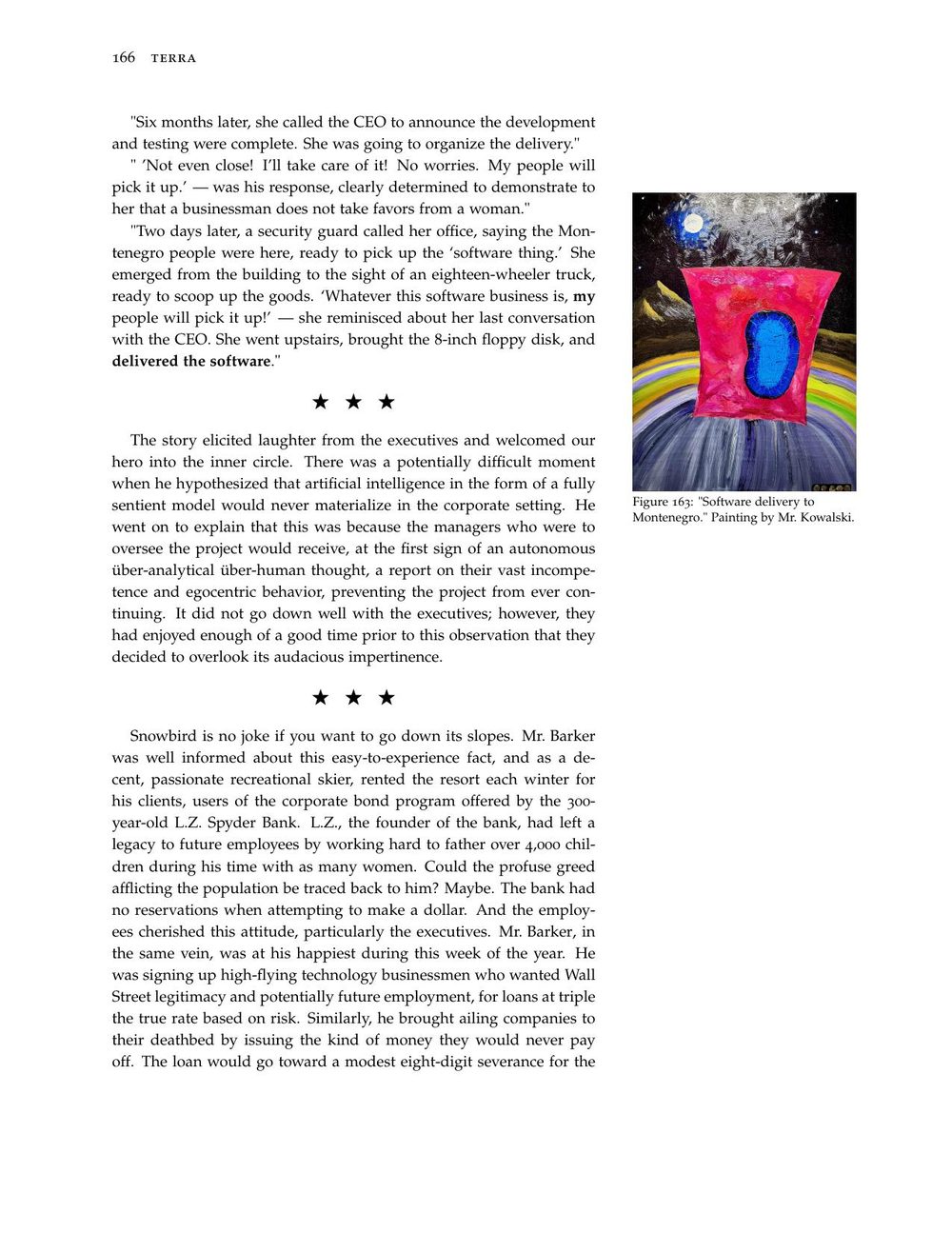
“Two days later, a security guard called her office, saying the Montenegro people were here, ready to pick up the `software thing.’ She emerged from the building to the sight of an eighteen-wheeler truck, ready to scoop up the goods. `Whatever this software business is, my people will pick it up!’ — she reminisced about her last conversation with the CEO. She went upstairs, brought the 8-inch floppy disk, and delivered the software.”
The story elicited laughter from the executives and welcomed our hero into the inner circle. There was a potentially difficult moment when he hypothesized that artificial intelligence in the form of a fully sentient model would never materialize in the corporate setting. He went on to explain that this was because the managers who were to oversee the project would receive, at the first sign of an autonomous über-analytical über-human thought, a report on their vast incompetence and egocentric behavior, preventing the project from ever continuing. It did not go down well with the executives; however, they had enjoyed enough of a good time prior to this observation that they decided to overlook its audacious impertinence.
Snowbird is no joke if you want to go down its slopes. Mr. Barker was well informed about this easy-to-experience fact, and as a decent, passionate recreational skier, rented the resort each winter for his clients, users of the corporate bond program offered by the 300-year-old L.Z. Spyder Bank. L.Z., the founder of the bank, had left a legacy to future employees by working hard to father over 4,000 children during his time with as many women. Could the profuse greed afflicting the population be traced back to him? Maybe. The bank had no reservations when attempting to make a dollar. And the employees cherished this attitude, particularly the executives. Mr. Barker, in the same vein, was at his happiest during this week of the year. He was signing up high-flying technology businessmen who wanted Wall Street legitimacy and potentially future employment, for loans at triple the true rate based on risk. Similarly, he brought ailing companies to their deathbed by issuing the kind of money they would never pay off. The loan would go toward a modest eight-digit severance for the executives in charge, and L.Z. would collect on the assets during the bankruptcy proceedings, thanks to their superstar team of lawyers. An exemplary strategy. And you know what? To demonstrate to these bozos who is in charge, he organized a ski race each year as the highlight of the Summit. Considering the CEOs were ordinarily out-of-shape blobs of fat, at best clueless about skiing, it was a piece of cake for him to win the race every year. OK, fine, four years ago, some bastard was ahead of him by about 5 seconds... maybe 10... so what?... those sonzabitches never got invited again. For reasons other than their pathetic victories.
- his right hand, Mr. Dubois, a French expatriate and the only one who could take him down on the slopes, except that he would never dare,
- his heads of corporate legal who had hooks back to the bank’s stats team in Missouri, which analyzed the risk of the victims behind the scenes, and
- his head of marketing and public relations, the annoying little jerk who had been hired from Pepsi to make the company more appealing to the public eye.
The invitees to the Summit, though deserving, were not the only victims. The employees of the resort were too. There were piles of arrogant, bossy, dissatisfied (because they had enjoyed better service elsewhere) jackasses wherever you’d look on the mountain. A demeaning attitude towards anyone except themselves and those they selfishly needed was beyond the limits of what the crowd employed at Snowbird could tolerate. Fancy jewelry, watches, expensive ski equipment signed by world champions, and helicopter rides, as well as the latest fashion from the Parisian and Milanese pistes, reminded the employees of how much they didn’t have and how much these people possessed. Even the tips, they felt, were a form of subjugation – one human over another, for reasons words do poorly at explaining.
The not-so-uncommon human desire to demonstrate to others that they belong to a lower, subordinate form of existence – a practice rampant wherever one looks – is the cardinal contradiction of humanity, rendering its pursuit of defining ethics and morality indistinguishable from pulp fantasy.
Take Mr. Dubois for example. Mr. Singh, a recent graduate of Harvard University’s Business School program with the highest of honors, had just been hired at L.Z. at the most junior level to pursue his great ambition of promotion by means of naïve alignment with everything L.Z. does.
One day, he entered the elevator on the 13th floor of L.Z.’s landmark building in New York City. By sheer accident, Mr. Dubois entered the same elevator on the 19th floor, heading to the 87th floor, where his office was. Mr. Singh was astounded that he had the once-in-a-lifetime chance to speak with someone so high up the ladder at L.Z., and immediately crafted a smooth plan to make a connection. A fluent French speaker — by means of torture by his parents, who pushed him to excel in the language as one of the fundamental skills necessary for progress in life — Mr. Singh first thought, “Papa, Maa, they’re right as always!”, then began a quick introduction in Mr. Dubois’ native French:
“Monsieur, je voulais vous exprimer mon honneur de pouvoir parler avec vous maintenant. Je m’appelle Singh, Rajesh Singh, je suis nouveau dans l’équipe des obligations convertibles du programme de M.B.A. de l’Université Harvard. C’est une véritable bénédiction d’\^{e}tre capable de travailler chez L.Z. o\`{u} l’histoire des réalisations est formidable.”3Sir, I wanted to express my honor in even being able to speak with you right now. My name is Singh, Rajesh Singh; I’m new to the convertible bond team from Harvard University’s MBA program. It’s a true blessing to be able to work at L.Z., where the history of achievement is tremendous.
As the last breath of his excited voice closed on his pitch, the door of the elevator opened, Mr. Dubois stepped out of the elevator, turned back towards Mr. Singh, and barked in a strongly accented, butchered English:
“Don’t you ever fucking talk to me again in your broken French!”
The sound of “ch” in “French” and the door closing coincided, adding to the effect. Mr. Singh thought his days with L.Z. were over for him. And they had not really even begun. Utterly demoralized, he went to his mentor’s office to confide. Mr. Gupta heard the description of what just transpired, laughed, and said:
“Oh, you are fine. He is quite funny, like that with everyone. No worries at all!”
“Ms. Martens!”
“Oh my Goooood, you know my name!” — replied the exuberant Ms. Martens.
“Yes, yes, we are the organizers of the race. We wanted to have a word with you!”
“Oh, I’m so excited anyone wants to talk to me. I’m all ears. Do you need a model? I might need some hair work done. Otherwise...”
It was the day of the race. Nearly all the new loans were about to be closed. Mr. Barker had only one thing left to do by himself: win the race. He asked the organizers to position its start at the steepest entry into Silver Dipper, the one he had practiced numerous times the day before, and requested that they place the little blue and red flags in a curvaceous trajectory along the steep slopes of the mountain all the way down to the bottom of Mineral Basin. He made sure the race-trail ran into two nasty regions filled with ugly moguls surrounded by domineering snow-covered spruces, a towering and intimidating rampart of white and dark green.
“They all chickened out,” — Mr. Barker thought. There were several executives, however, who looked like they were in desperate need of money or might have wanted to provide some much-needed entertainment for the crowd. At last, seven competitors assembled at the top of the mountain. The oddest of them all, Ms. Martens! When the Pepsi guy told Mr. Barker his fiancée was interested, he thought his head of public relations had gone mad. He knew she was crazy, but to hear it from the Pepsi dude was startling. She was difficult not to spot on the slopes. Even without the mind-bending screaming, she was dressed from top to bottom in the most iridescent, plutonium-powered pink color the chemical industry could ever manufacture. Her helmet, skis, outfit, socks, gloves, boots, and even poles were bright pink. She was both visible and audible4Sound does not propagate in space. from space. Earlier in the week, he noticed from the chair-lift how she pizza-slice controlled her speed down the middle part of Chickadee5Easiest run on the mountain meant for first-day skiers. and lost consciousness after all the effort. Though, frankly speaking, she was taking intense, strenuous lessons with the ski school.
He consulted his legal team to determine whether he would somehow be liable if something, God forbid, were to happen to her. The lawyers approved, so he thought he was in for some entertainment, hopefully lasting more than 3 seconds.
Mr. Kowalski was at the bottom of Mineral Basin, observing the event, expecting a spectacle for the ages. He had spent several of the most abysmal nights surrounded by vanity of historic magnitude. By day, he mostly socialized with the ski instructors, who were a formidable crowd full of hilarious stories. There was certainly a dose of ego about their skiing adventures, which Mr. Kowalski, not being an expert, took in good humor.
The crowd was enthusiastic to witness greatness. Mr. Barker was the first to tackle the trail. He waved from the top of the mountain and took on the challenge. A decent skier, he zoomed past those flags with aplomb. The crowd was cheering, in particular to let Mr. Barker’s team members know they were in awe of him as a sportsman. Minutes later, he flashed the crowd at the finish line a smile, which revealed some pretty impressive dental veneer work. Victoriously, he waved his pole at the score: 4 minutes, 12 seconds. Everyone was ecstatic. The CEOs and CFOs were swinging their heads in complete disbelief at the result, praising him all puzzled why a talent of such magnitude was not on the Olympic podium.
Next on the track was a CFO of an oil company who had made some pretty misinformed futures trades and was in desperate need of keeping his venture afloat, at least until he paid himself his golden parachute.6A golden parachute is an agreement between a company and an employee (usually an upper executive) specifying the employee will receive certain significant benefits if employment is terminated. These may include severance pay, cash bonuses, stock options, or other benefits. The acquisition for dirt cheap had already been negotiated with a competitor, with full approval from both boards. He ventured into the unknown with all his might; however, after several turns, crashed badly and flew headfirst down the face of the mountain.7The narrator of this tale suffered a similar wipe-out at the exact same spot and consequently has strong sympathy for this person’s misadventure. The curious reader is encouraged to visit and experience the mountain. The trace his body left was noticeably similar to the logo of one of the sports companies present at the Summit. It caused great laughter when an observant spectator discovered it. Among the remaining competitors, a total of three finished the race in 9 minutes 37 seconds, 7 minutes 15 seconds, and 13 minutes 10 seconds. One competitor flew off a mogul at an uncontrollable speed, as if catapulted by a detonated bomb, and slammed into a wall of trees. He briefly disappeared, occluded by a cloud of disturbed snowflakes. His misfortune was met with thunderous applause when he emerged holding one of his skis in his hands, signaling he was okay. Mr. Barker had the time of his life. What followed was probably the most majestic scene he would ever witness, even if he were immortal.
Ms. Martens was pizza-slicing down the switchback that led to the start of the race. Everyone laughed when, at the last turn, she slipped and fell clumsily. A small part of the crowd, somehow miraculously challenged by ethics, equated her attempt with suicide and demanded that the organizers immediately prevent her from participating. The head of the race organization, Mr. Jay, waved it off and confirmed it was a fully approved mission, personally acknowledged by Mr. Barker.
Ms. Martens swayed her hips and poles in a hypnotizing act from the start of the race and plunged into the narrow chute. The next 1 minute and 10 seconds were the most epic the mountain had ever seen. Her pink body slid at nearly 90° with respect to each of the attacked prickly plastic gates, thundering down the slopes. It all appeared as a well-controlled free fall directed by her slim body, as if by magic. She sped through the moguls, her knees absorbing each bump with grace and ease as she dove straight down to the finish line. A lightning bolt could not have reached the bottom faster.
The crowd was, from the moment Ms. Martens charged down the mountain, simply frozen, speechless. Except for the organizers. Everyone stared and gasped for a reason to believe it was real. Mr. Barker’s face transformed from one ready to have fun to one of complete disbelief, to a final expression of intertwined jealousy, bruised ego, and embarrassment, as though wondering what all these people were going to think of him now. At the innermost depths, memories of sexual incompetence in early adulthood, the main drive in his eternal quest for power, rose to ravage his soul.
Ms. Martens zoomed past the finish line at such speed that, to stop, she sent a massive cloud of snow over the spectators, disappearing behind the organizers’ desks. She clocked 1 minute 10 seconds at the finish line. Some clapping was heard, led by Mr. Kowalski. The crowd was somewhat quiet and concerned about their loans. They knew Mr. Barker would be infinitely pissed for being so brazenly ridiculed in front of all his clients.
A minute later, as the snow fog settled, Ms. Martens emerged with her helmet off: “Hey, how did I do?”
The award was given. Nobody was fired. Except for the Pepsi guy. For reasons other than his fiancée’s triumph.
“Ms. Martens, we believe Mr. Huberman over there can fit into your outfit. He’s got the same tall, slim body as yours; we only have to prepare for the prank. He’s competed at the national level; it might become his greatest victory ever. He’s taken it upon himself to study your gait and body language for the past two days. We can do this...”
“Jesus Christ! Give me...” — “Yessir!” — “...the name of the dude again, Huberman, huh? It was his idea, right? What a story! Where’s St. Paul? I want that name and the story put on tablets to never forget this act of heroism. I want the tablets at the gates of Heaven.” — God was out of his mind after hearing about Ms. Martens’ victory from our witness in the field. “I want it published in the Heavenly Periodical. First page. He is the new role model for the human race.”
On their flight back home.
“The stock is down 4% today. Forty billion wiped out of our market cap. They say: ‘A failed attempt to acquire a corporate bond’ – in the Journal. I mean, how’s this failed? We will get it next time. Damn Wall Street. All of them are such bastards.” — Mr. Bataglia was miserable.
“Mr. Kowalski, are you a member of any boards8of directors. out there?” — demoralized, Mr. Glossman asked the question even though he knew the answer a priori. He wanted to put someone, and whom else than the readily available Mr. Kowalski, in their place and feel a little bit better about himself, proving once again who holds power on the planet.
“No, not really. But! I heard some pretty good stories on the mountain while you guys were fucking around at the meetings.”
“Please share...” — Mr. Bataglia was looking for a ray of sunlight on the miserable trip.
Mr. Kowalski glanced over at the last row of seats, where he saw what had been a common sight all week: Mr. Kroenecker’s hands seeking ways across the armrest to touch the ever-giggling Ms. Thorensen. He turned back and started his storytelling...
A week passed.
“Mr. Kravitz, Mr. Itchego, for years you’ve been parading some spineless, nerdy sonzabitches and their lousy projects before me. These people don’t know business, don’t know shit. It took you how many years, huh... how many years to realize you should send over someone like Mr. Kowalski, someone who has business wit...” — an angered Mr. Glossman yelled at the senior vice-presidents in the Lab.
“I’m sorry, sir. I take full responsibility. It was an oversight. We will make him available for future events. Did he discuss his projects?”
“Not at all. You see, he is not like you people. You sell all kinds of crap all the time – please tell me of a project I could ever use from the Lab, huh? Huh? Give me one?”
“I’m sorry, sir, we try our best to hire the smartest people on the planet...”
“Shut up. Shut up. Now, tell me about his projects...”
Fifteen years later, the Kowalskis were at a swanky hotel on the French Riviera.
“I’ll be damned...” — Mr. Kowalski shouted in disbelief at a curious Mrs. Kowalski – “...if that isn’t Ms. Thorensen. Let’s go and say hi!”
“I’m so sorry, I don’t think you remember me. Many years have passed. You are Ms. Thorensen, right? We were once on a private jet from Chicago to Salt Lake City with the executives from the firm.”
“Hi! Oh, I remember! Mr....?”
“Kowalski!”
“That’s right! It was a fun trip; I remember the gal winning the race!” — she went on to reminisce about the Summit. The Kowalskis joined her at the table, and the conversation ensued. At some point, Mr. Kowalski asked:
“Are you still in touch with Mr. Kroenecker?”
“Oh, no, he is such a creep!”
“What do you mean? I thought you folks had a great time at the Summit.”
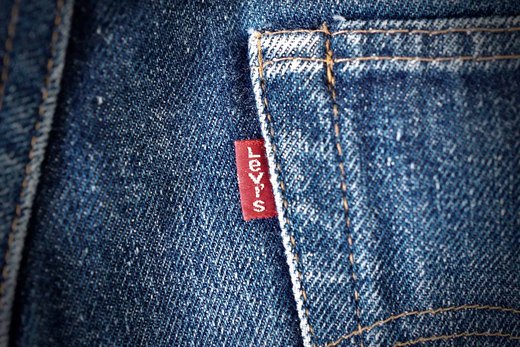
“Well, he was all over me the entire trip. Became unbearably obsessive. On our way back, I decided to wear something less sexy. My everyday Levi’s 501s. I thought they would calm him down a bit; yet, he was unstoppable. We went to the back of the jet to get some drinks, and he ripped the red tab from my jeans with his teeth.”
“Come again!”
“He growled like a tiger sitting in the safety seat, and as I was pouring drinks, he bit my ass and ripped it! You know, the little tab protruding out of the back pocket.”
Fifteen years later, at a theater intermission, Mr. Kowalski spotted the aging Mr. Kroenecker sitting in a lounge chair. Mrs. Kowalski was in the midst of a conversation with a patient of hers, whom she had met previously. Mr. Kowalski excused himself and approached Mr. Kroenecker. His hands and head were trembling. “What are the odds the old guy still remembers me?” — he thought to himself.
“Mr. Kroenecker! We met once many years ago on a jet to Salt Lake City! It was a ski retreat with the firm! Remember...”
Mr. Kroenecker took time to understand the sentences. His neurons reached into the deepest, still-accessible trenches of their molecular architecture to fetch distant memories of the event.
“Yeah... funny guy...”
A slow conversation started in which the more Mr. Kowalski dug into the mind of Mr. Kroenecker, the more he realized the old man spoke and thought like Molloy in Samuel Beckett’s Trilogy. He had to be deep into his eighties. At some point, Mr. Kowalski hoped to evoke the most relevant memory:
“Mr. Kroenecker, I met Ms. Thorensen a couple of years ago on the French Riviera. She reminisced about the two of you at the Summit.” — Mr. Kowalski yelled, hoping to reach out. “I’ve heard you were quite the tiger back then. I mean you still are. She said you ripped her Levi’s jeans tab! You know, the red thing sticking out of the back pocket.”
“Yeah, yeah... the Thorens9[sic]. gal...” — his eyes sparkled. The memory was vivid. No doubt. “Need to check my possessions... My possessions have been taken away from me...” — he cried. “Perhaps...” — Mr. Kroenecker’s hand reached out into the inner pocket of his jacket, shaking along the way. Seconds later, a wallet emerged. He opened it with great effort and from the wallet’s depths pulled a Levi’s red tab. His eyes told an undeniable conclusion: he was still in love.
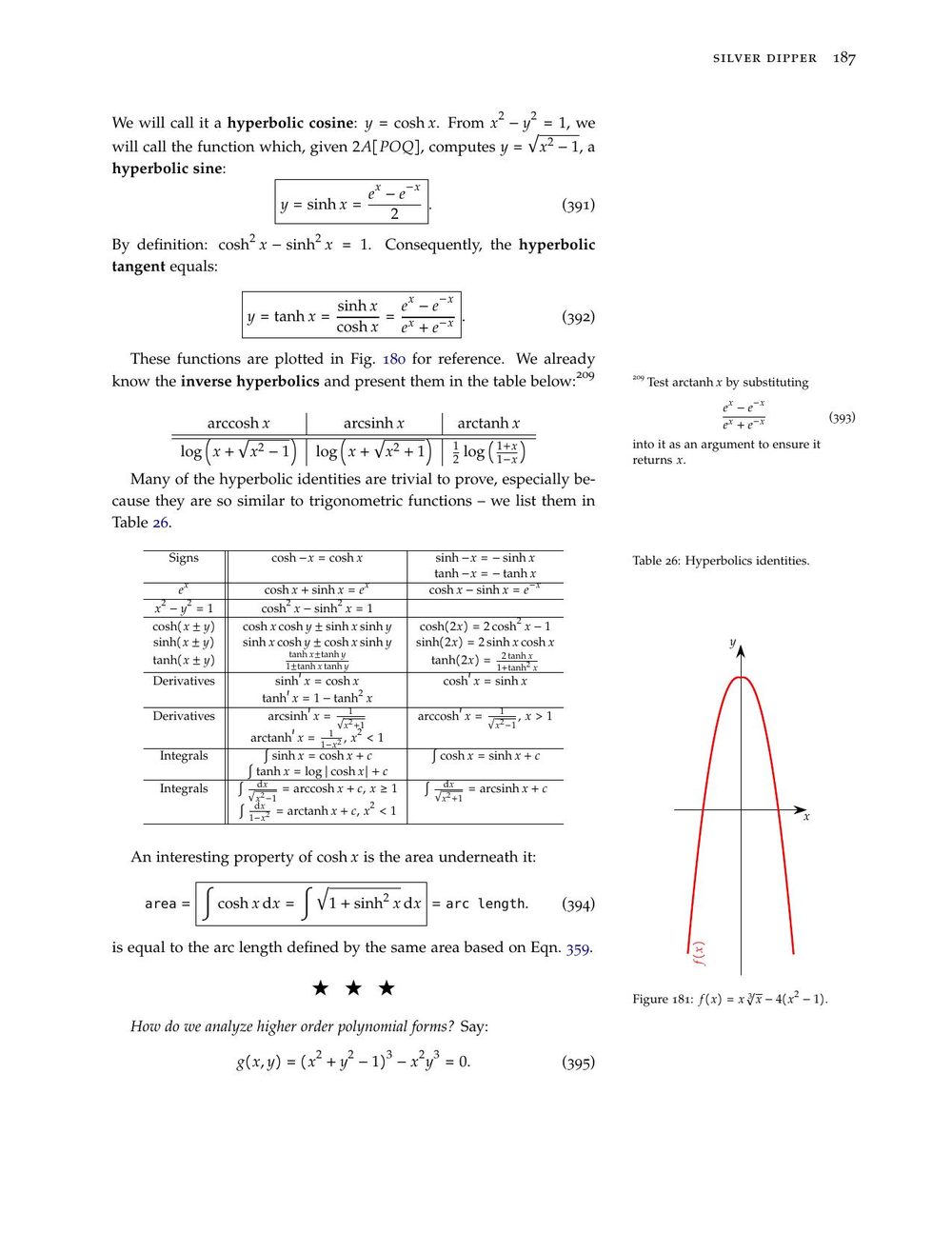
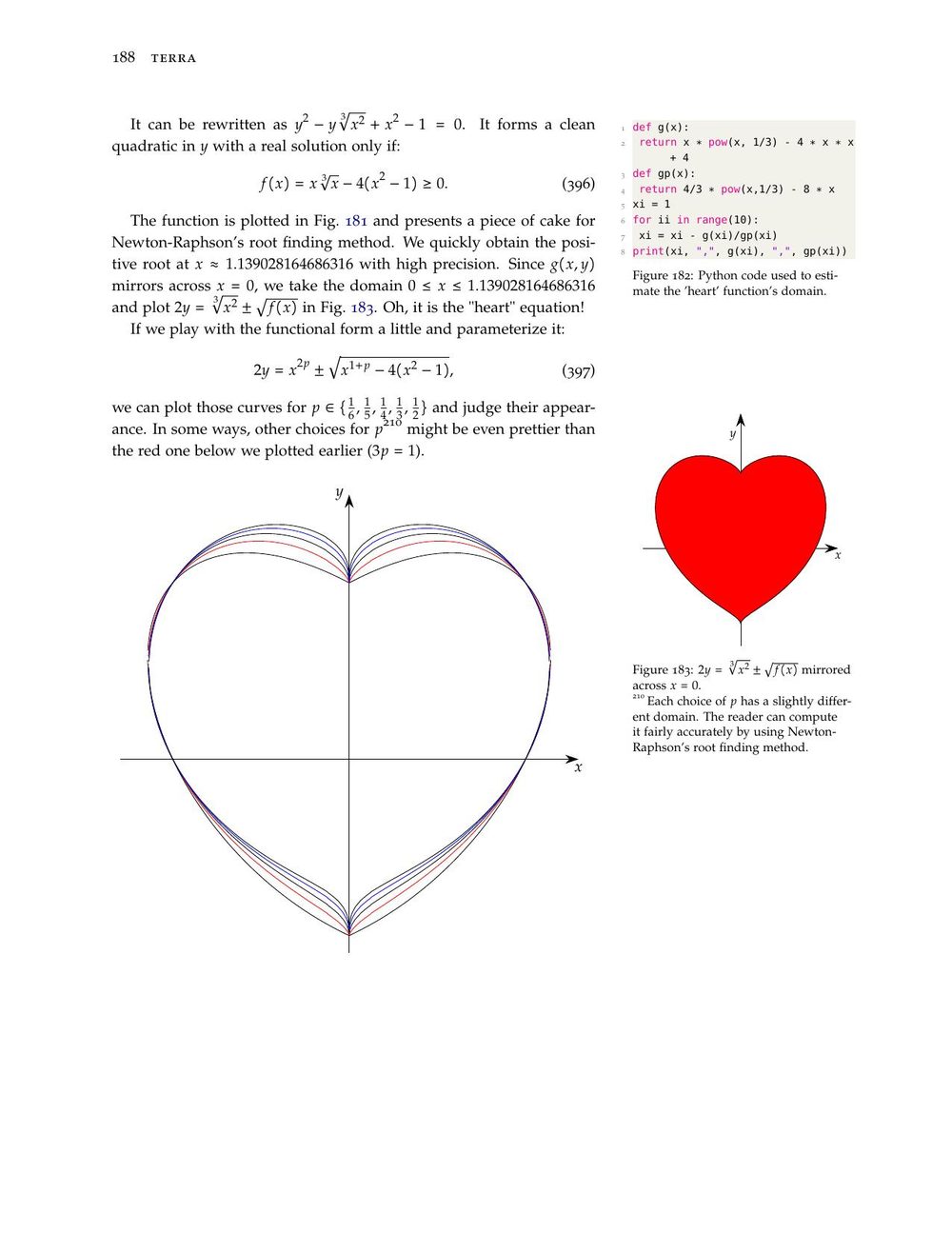
The chapter continues into the mathematics — switch to As printed to read the rest.

That was one chapter of twenty-three.
Nine hundred and thirty-four pages of fiction and mathematics, braided together — real calculus, real physics, real code, and the people who live among them.
Buy the PDF — $9.99